

A payment cascade is an automated payment-routing mechanism that switches a customer to a predefined backup option when the primary payment method fails. It helps reduce the number of abandoned purchases and preserve a seamless payment experience without manual intervention.
Payment Cascade: Explained Simply
A payment cascade is a sequence for selecting payment routes according to predefined rules. The system does not send each transaction to a random provider: it first uses the primary payment method and, if a specific error occurs, assesses whether it can switch to the next available option.
For example, a customer chooses to pay by card. If the primary acquirer cannot process the request, the system may offer a backup payment method: another acquirer, Faster Payments System (SBP), a QR code, or another connected option. This approach helps reduce the number of situations where a customer sees a payment error on the website and immediately leaves the page.
It is important to understand that payment cascading does not mean blindly retrying the transaction. Before making another attempt, the status of the first transaction must be checked: it may have been accepted, declined, or left in an undetermined state. Otherwise, there is a risk of duplicate charges or duplicate orders.
To launch a cascade, a business should define route priorities and switching conditions in advance. Payment transaction data must also be processed in compliance with security requirements, including PCI DSS — a payment data security standard developed by the Payment Card Industry Security Standards Council.
Why Payments Fail and When a Backup Route Is Needed
A payment error on a website does not always indicate the same problem. A bank may decline the transaction, a payment service may become temporarily unavailable, or a technical failure may occur while data is being transmitted or the transaction is being confirmed. Sometimes the issue is on the customer’s side: the payment details were entered incorrectly, confirmation was not completed, or an unsuitable payment method was selected. Analyzing common scenarios will help you prepare an instruction guide to payment widget errors and clear guidance for users.
Payment cascading is appropriate when an error indicates that a route is temporarily unavailable or that a specific provider has declined the transaction, provided that retrying through another method does not create a risk of a duplicate charge. For example, if a service is unavailable, you can offer a backup payment method: another card, an electronic wallet, or another connected route. If the customer entered incorrect payment details, however, automatic switching will not resolve the issue — it is better to ask them to check the information.
A “processing” status must not be treated as a decline. Resubmitting the payment in this situation may result in a duplicate transaction.
For each code and status, define the appropriate action in advance: retry the request, select a backup payment method, wait for the result, or contact support. The user should see not a technical message, but the next step: check the details, choose another method, or avoid retrying the payment until the current transaction receives a final status.
How Automatic Payment Routing Works
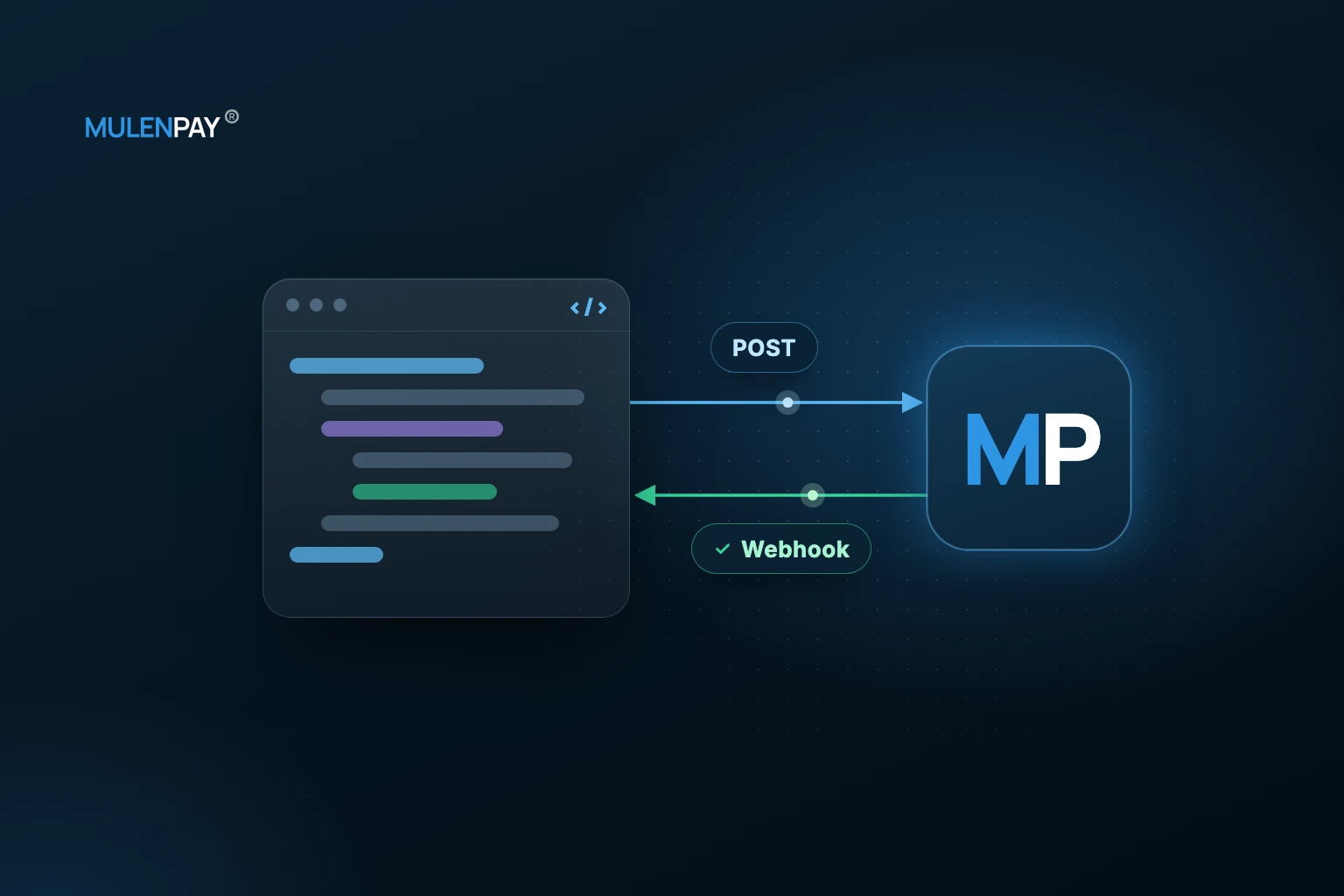
A payment cascade begins when a website sends a payment request to a payment gateway. The system matches it against predefined rules and selects the first route. For example, it may consider the provider’s priority, payment method, currency, transaction amount, customer’s region, or transaction type. That is why an integration with the payment API must provide enough data for the correct scenario to be selected.
If the first route returns a successful response, the cascade stops. The order receives a single final status — “paid” — and the customer is not asked to repeat the action. If the gateway detects a temporary failure, service unavailability, or a decline covered by the configured rules, the system activates the next permitted route. At the same time, it is important to distinguish a technical error from a final decline: retrying is not appropriate in every case.
All attempts should be linked to the same order and recorded in a log: the selected route, the gateway response, the event time, and the final status. This allows the support team to see where the payment error on the website occurred and prevents them from manually creating a duplicate payment. To protect payment data, a business must also consider the requirements of its payment environment, including PCI DSS — a payment data security standard developed by the Payment Card Industry Security Standards Council.
Which Rules to Include in a Payment Cascade
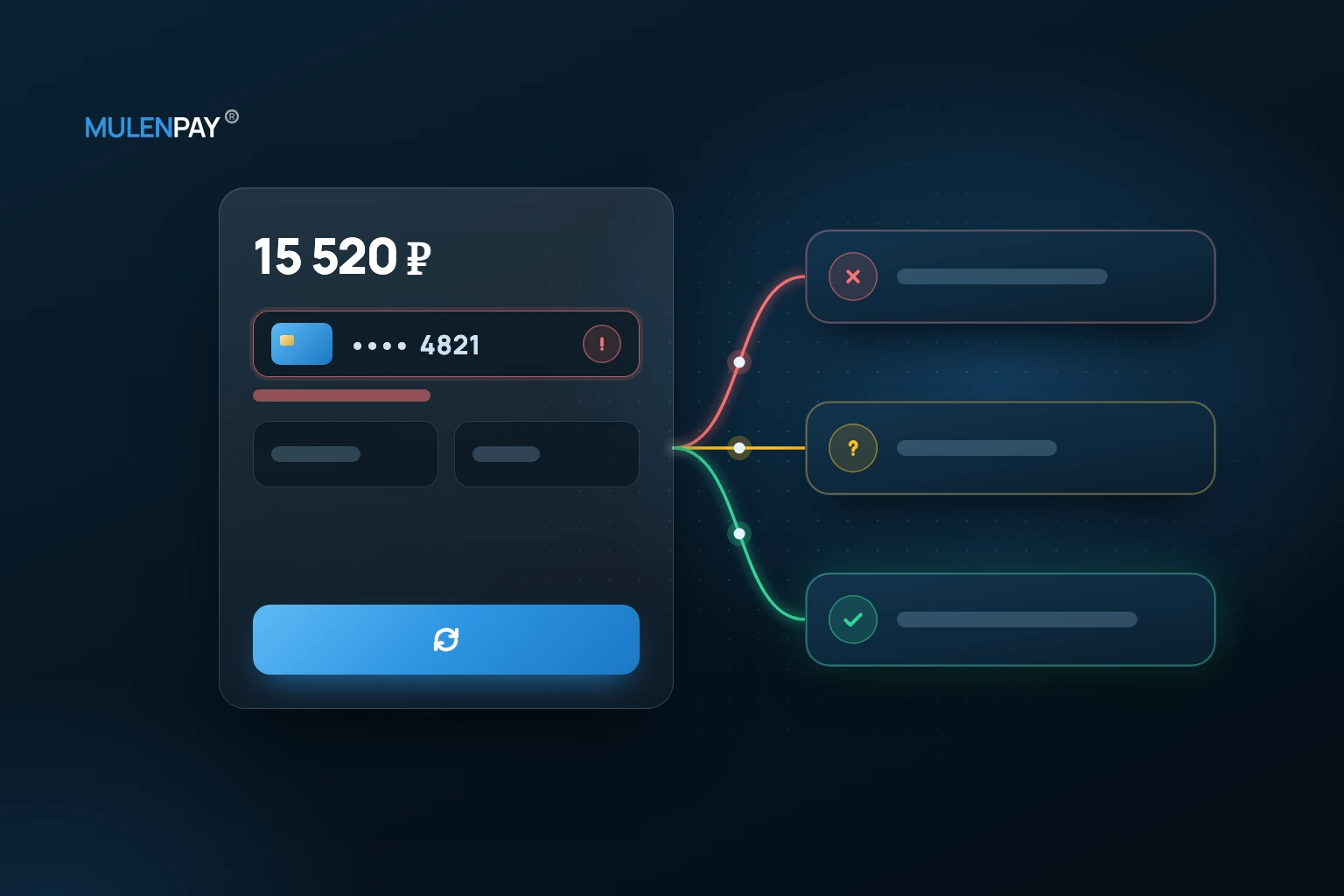
Start by dividing errors into three groups:
- Retryable — temporary unavailability or a technical failure. A backup route can be used in these cases.
- Non-retryable — a bank decline, incorrect card details, or insufficient funds. Retrying may only worsen the customer experience.
- Undetermined — the transaction result is unknown. In this situation, the payment must not be resubmitted immediately: check its status first to avoid creating a duplicate charge.
Set a priority for each payment method. Consider route availability, conversion rate, order requirements, and audience characteristics such as region, device, currency, or customer type. It is convenient to document cascade rules during payment route integration, so that the business logic does not depend on manual switching.
Limit the number of retries and add stop conditions: suspicious activity, frequent declines, mismatched data, or a risk of repeated authorization. All attempts must retain the same order and transaction IDs. This allows the system to link technical route changes to a single purchase and simplifies the investigation of a payment error on the website.
Show the customer a single final status — successful, declined, or requiring action. Internal switching between payment methods should not turn into a series of contradictory messages. When working with card data, comply with PCI DSS requirements — the security standard developed by the Payment Card Industry Security Standards Council.
How to Measure the Effectiveness of Payment Cascading
Evaluate payment cascading not by the number of configured routes, but by the result of each attempt. Compare the share of successful payments before and after implementing routing, using the same periods and comparable traffic segments. Track the following separately:
- initial declines — the payment failed through the primary route;
- successful backup attempts — the payment was completed after switching;
- unpaid transactions — all available scenarios ended in a decline or the customer abandoned the process.
To interpret the results, it is useful to track payment transaction analytics and growth opportunities. This helps reveal not only the final conversion rate, but also losses at individual stages. Monitor processing time, the share of payments with an undetermined status, and the number of support requests. An increase in these requests may indicate unclear statuses, confirmation delays, or incorrect transaction retries.
Check for risks after switching: whether the number of duplicates, refunds, and erroneous repeated charges has increased. Each transaction must retain the link between the initial and backup attempts so they can be matched correctly.
Break down the metrics by payment method, device, sales channel, and error type. For example, a failure typical of a mobile flow should not be grouped with declines related to a specific payment method. This breakdown shows where the cascade actually recovers payments and where the issue requires changes to the interface, integration, or routing rules.
What a Business Should Do to Launch a Payment Cascade
First, list all available payment methods: bank cards, transfers, or any other supported option. Define the primary and backup route for each scenario. For example, if the primary route is unavailable, the request can be sent through an alternative route, but only if the cause of the failure allows a retry.
Document the codes and statuses returned by payment nodes in a table. Specify which responses allow the system to move to the next method and which require the process to stop. A transaction decline, technical unavailability, and a missing response require different rules: automated payment cascading must not initiate a retry without checking the result of the first attempt.
Configure request idempotency: use a unique identifier for each transaction and retain it when the request is resubmitted. The notification handler must correctly process duplicate messages and must not create a second payment if the first one has already been confirmed or is being processed.
Before launch, test the unavailability of a route, a bank decline, a delayed notification, and a “processing” status in a test environment. Also make sure that a payment error on the website is accompanied by a clear message and that the customer does not see multiple charges.
After implementation, add monitoring for routes, statuses, and switches to backup payment methods. Set up alerts for increases in declines and retries. Analyze the actual data regularly and adjust the cascade rules while maintaining a change log.